
What a difference from my first try. Apparently when it comes to steak the type of cut matters. But that wasn’t the only variable in my second sous-vide cooking attempt. Last time, I wasn’t convinced that my generic, non-freezer zipper bag really did the job for immersion sealing (a pivotal part of the technique). This time I used a silicone bag and loaded it up with an Angus Rib-Eye* from Aldi’s. Gotta say, extremely impressed with the delicious results. But I have to confess, I paid more attention to the details.
Seasoning Sinks In
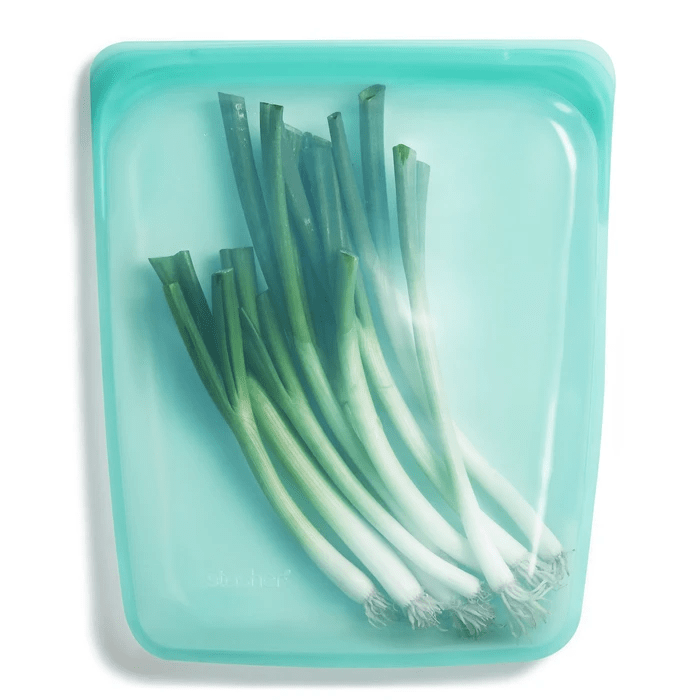
It came to me while venturing to a restaurant for outdoor dining six months into the pandemic — use the hand-me-down Stasher Silicone Half-Gallon Bag from my son (thanks buddy!) and marinate the meat. Stasher says this bad boy holds two strip steaks for sous viding, and it was more than ample for a pound of rib-eye. Then I literally made a marinade as I added a drizzle of Olivado’s Macadamia Nut Oil with some Penzys “Justice” spice blend (another gift from my son!). It’s a magical marriage of shallots, garlic, onion, green peppercorns, chives, and green onion — highly recommended.
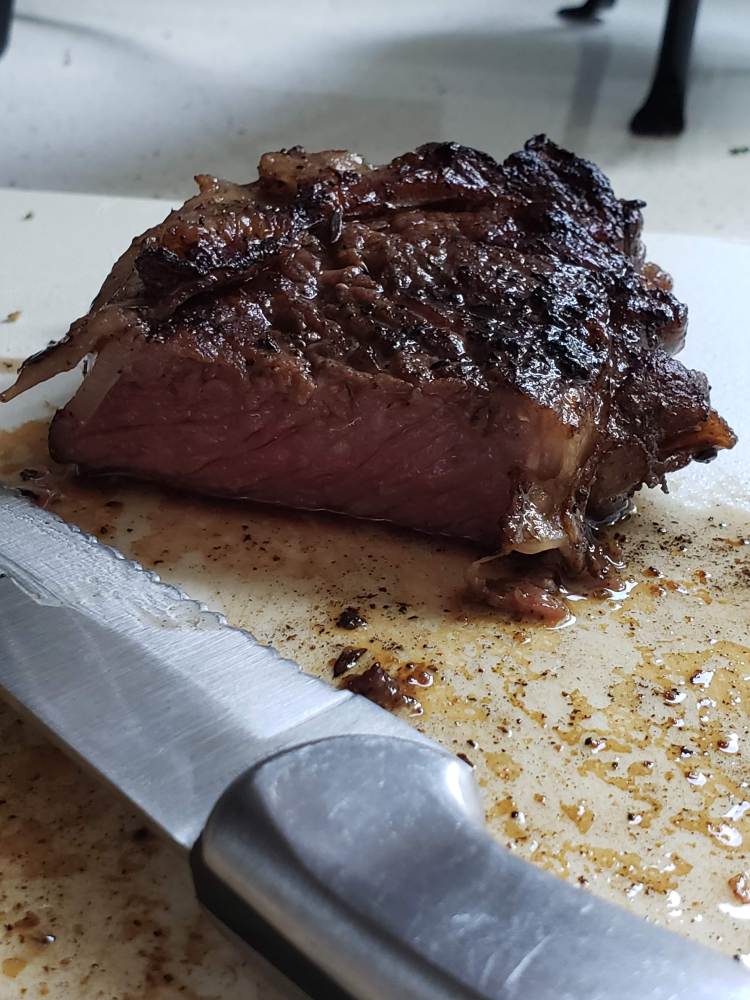
After sealing the bag, I clipped it to the side just to make doubly sure it was good and dialed the cooker to 129 degrees, optimal for medium rare. With the timer set for one hour I waited. As advertised, the sous-vide cooker did the rest and the meat was EVENLY done to perfection. A quick sear in butter, like 15-seconds quick, on each side finished the rib-eye to sublime melt-in-the-mouth amazing — oh yeah, never going back! Such restaurant-quality results made me wonder if I’d misjudged Angus beef a little.
What’s My Beef with Angus?
Back in the day, I was informed by industry experts and buyers I worked with that *Certified Angus Beef was largely a marketing invention. Tasting the sous-vide results using it made me question that assertion. I don’t, however, doubt that what the animal eats matters. Cattle are ruminants that should be grazing on clean grasslands for optimal health.

With that understood, it’s not shocking to learn that organic grass-fed and grass-finished beef, like Verde Farms offers, has superior nutritional benefits: it’s 20% lower in calories than grain-finished beef and has higher levels of Omega-3 fatty acids, CLA’s (Conjugated Linoleic Acid — an essential fatty acid that fights cancer and inhibits body fat), and Vitamins A and E.
As a carnivore, I also keep in mind what Dr. Temple Grandin discovered about animal stress and meat quality. All that said, sometimes budget and the need to eat override my knowledge and preferences. In the case of grain-fed and finished Angus beef, it worked out pretty great as my sous-vide success story attests. At least anecdotally.

 Brandmoon: Words Matter