
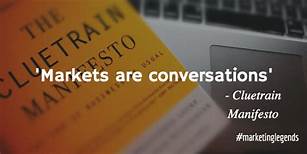
Way back in 1999, the godfathers of the internet experience put out The Cluetrain Manefesto & its “95 theses” designed to disrupt business as usual on the nascent internet. First off, they eschewed calling all of us out in cyberspace “users.” It should be required reading daily for any internet marketer to get their mission straight; here’s how they start:
- Markets are conversations.
- Markets consist of human beings, not demographic sectors.
- Conversations among human beings sound human. They are conducted in a human voice.
- Whether delivering information, opinions, perspectives, dissenting arguments or humorous asides, the human voice is typically open, natural, uncontrived.
Early Ecommerce Days
When I started using ecommerce back in the day, when Amazon.com was still an online bookstore and sites like Overstock.com debuted, it all seemed so pure. As content creator for a regional retailer, I was convinced that we would always talk to anyone on our site one-on-one vs the old-school broadcast model of mass communication. It worked for awhile.
Competition Is Corrosive
As players multiplied in the marketplace, with IT development focusing on blogs and online sales fliers, things seemed to default back to the same old, same old sales-pitch model. Unsurprising since ours was a tough, slim-margin sector. As we moved to online ordering and shopping lists (oooh, fancy!), the holy grail of personalization seemed to come into focus.
We created personas to epitomize our customers and spoke to them in an “approachable” tone. I am not making this up, we called them Karen and Ken; they had two young children. It seemed like we finally arrived at the Cluetrain station (yes, it’s not your imagination, I did torture that metaphor). With a loyal customer base that literally lined up for each new store opening, three a year at last count, it was safe to say we were getting somewhere.
Unfortunately, as all marketers do, we did end up categorizing and labeling people — which was something the authors resented but probably expected. I’m reading it again, so we’ll see for sure. In the meantime, I guess it shows you just can’t have everything. As one of my favorite comics from the 90s once said in response to that old adage, “where would you put it?”
Have you read, or even heard about, The Cluetrain Manifesto? Tell me what you think in the comments.

 Brandmoon: Words Matter